Best English AI Homework Helpers for Writing and Essays
The educational paradigm has undergone significant shifts with the incorporation of artificial intelligence as a new partner in students’ learning processes. AI homework helpers have evolved significantly from being simple grammar-checking tools to complex writing assistants that can aid in idea generation and organization, making arguments more convincing and even refining the writing. The debate over the impact of technology on academic integrity and learning is still on, but it’s clear that AI tools have already started to dictate the way students treat their assignments.
The Proliferation of AI in Student Writing
If you drop by a college or a high school today, you might very well find students making use of AI tools while they are reading the textbooks and taking down notes. This trend is not merely a matter of seeking fast ways of doing things; rather, the majority of the students who availing such tools do so to develop their understanding, to get through the so-called ‘writer’s block’, and even to work on their grammar skills. The question has now shifted from whether students will use AI for their homework to which tools are best for educational purposes and how students can use them responsibly.
To make the navigation of this intricate terrain easier, I have set out to try several AI homework helpers that are popular today but in their writing and essay capabilities only. I have concentrated on how well the supports provided by the different tools align with the learning process rather than simply submitting assignments for students.
Testing Methodology
In order to carry out the review, I designed a few scenarios that are common for students: writing a literature analysis essay, making a pivotal argument, crafting a research paper outline, and improving a rough draft. I rated each tool on the basis of their explanations, suggestions, educational value, usability, and ethical design features that promote learning rather than cheating.
The Tools: Detailed Reviews
Claude (by Anthropic)
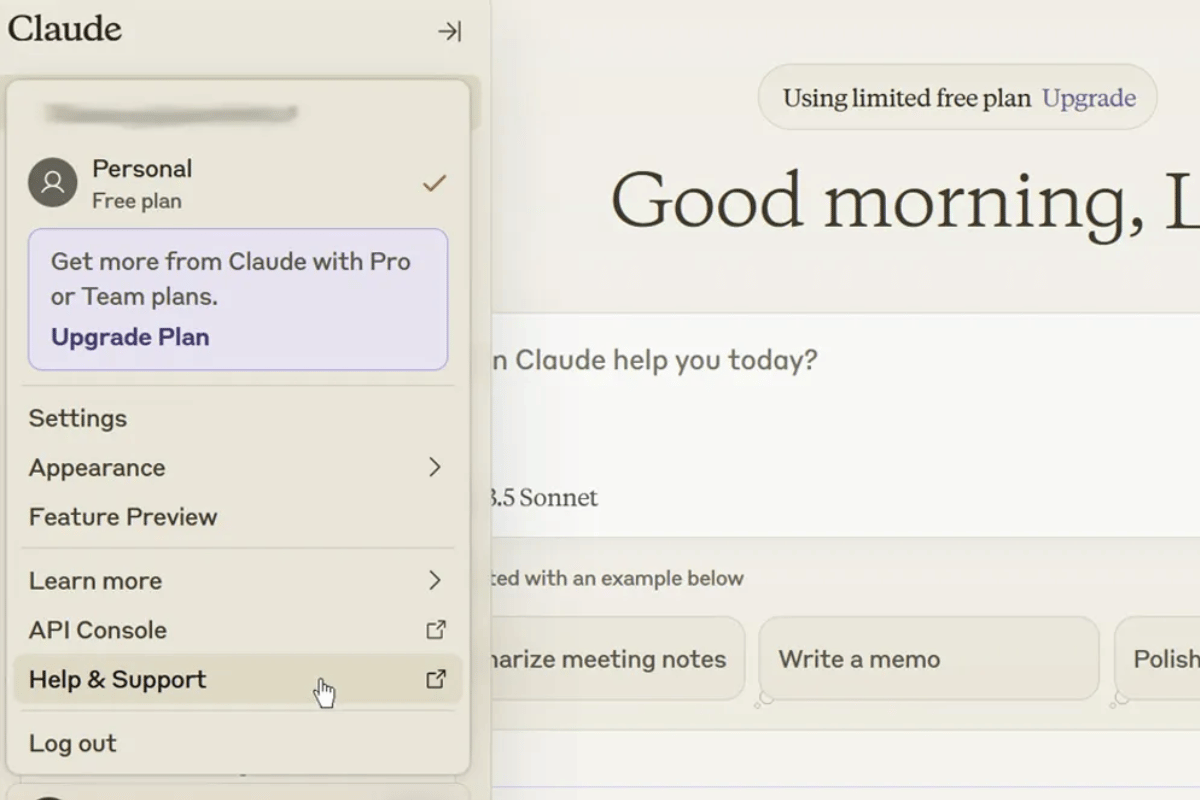
Amongst the others, Claude gets noticed by its conversation-like approach to aiding students in their writing problems. Instead of simply providing fully written essays, Claude shines through with Socratic-style guidance that encourages students to form their own ideas.
Strengths: When I turned to Claude for help with a literary analysis, it came up with astute questions about themes and character motivations that made my mind go deeper. The tool is particularly adept at taking writing concepts, dissecting them into parts of an essay, and giving minute critiques on drafts. Claude’s interactions come across as highly informative and scholastic, thus rather feeling like an interaction with a writing tutor, than a homework machine.
Educational approach: By its very design, Claude constantly inspires students to think of new ideas and sometimes even refrains from writing full essays, instead providing frameworks and guidance. Such a feature, although possibly annoying to students looking for quick solutions d, indeed facilitates real learning.
Best for: Students who are looking to get their writing skills up, require assistance with the understanding of assignment criteria and want to receive comprehensive feedback on their work.
ChatGPT (by OpenAI)
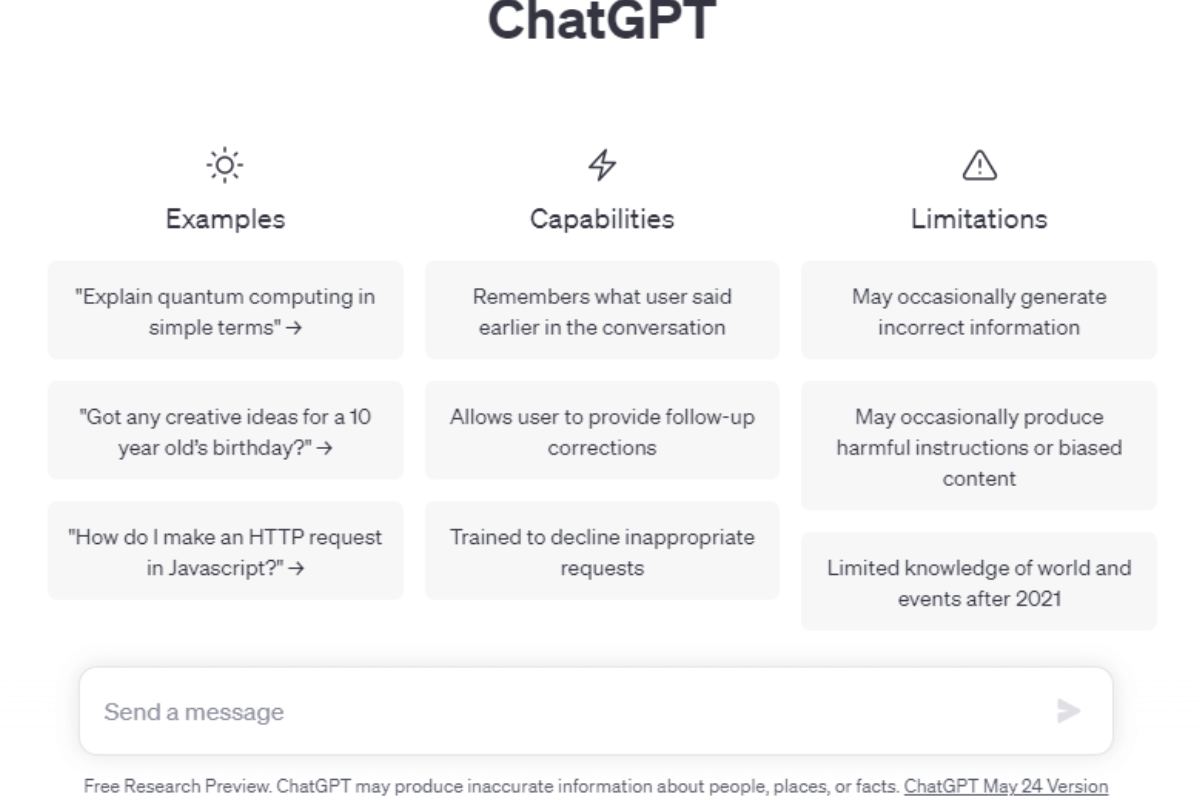
ChatGPT is almost everywhere and in the hands of students, and this is not without reason. It is a multifaceted tool, easy to access, and powerful enough to handle an immense variety of writing tasks.
Strengths: ChatGPT can within seconds produce an outline, recommend a thesis, give examples, and at times even write a whole essay if prompted. The tool’s biggest asset is that it can be used for brainstorming and elimination of writer’s block. I also found it to be very good in explaining rhetorical techniques and even providing various angles of view on some of the debatable topics.
Considerations: The extreme ease with which ChatGPT can produce full-blown assignments is the primary factor that draws both praise and criticism. The students in question need to possess a fair amount of self-discipline in order to use it as a learning aid rather than a replacement for their own work. The writing quality can occasionally seem mechanical, especially in the case of longer compositions.
Best for: Idea generation, paper outlining, comprehension of various viewpoints on a certain topic, and getting rid of the block in the writing process.
Grammarly
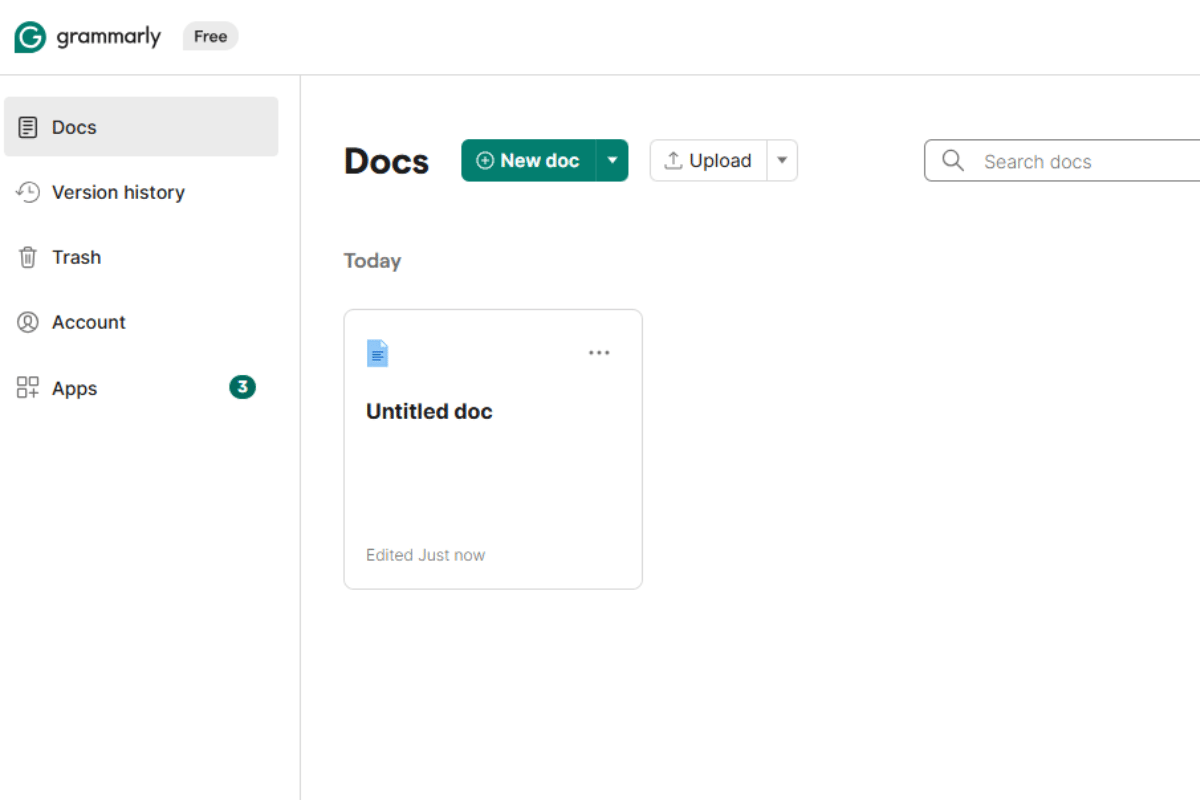
Grammarly is not the conventional AI assistant in the sense of conversation; nevertheless, it has significantly elevated its writing enhancement platform by means of the incorporation of what can be summarized as AI major features.
Strengths: The tool is the most beneficial at the polishing part of the writing process. Its real-time corrections for grammar, clarity, tone, and style allow students to get the most out of their work while also learning why some of the alterations will actually improve their writing. The comments that go along with each suggestion make editing a learning experience. One of the things I liked most about Grammarly was that it spots minor mistakes such as vague pronoun references and awkward wording.
Educational value: Due to Grammarly’s requirement that students create their own texts first, it is a built-in feature that encourages the production of original content. The premium edition includes features like vocabulary enhancement and plagiarism detection which are the most advanced and hence the most expensive.
Best for: Those students who have made a draft already and want clarity, correctness, and style to be amplified and at the same time they learn grammar and writing conventions.
Quillbot
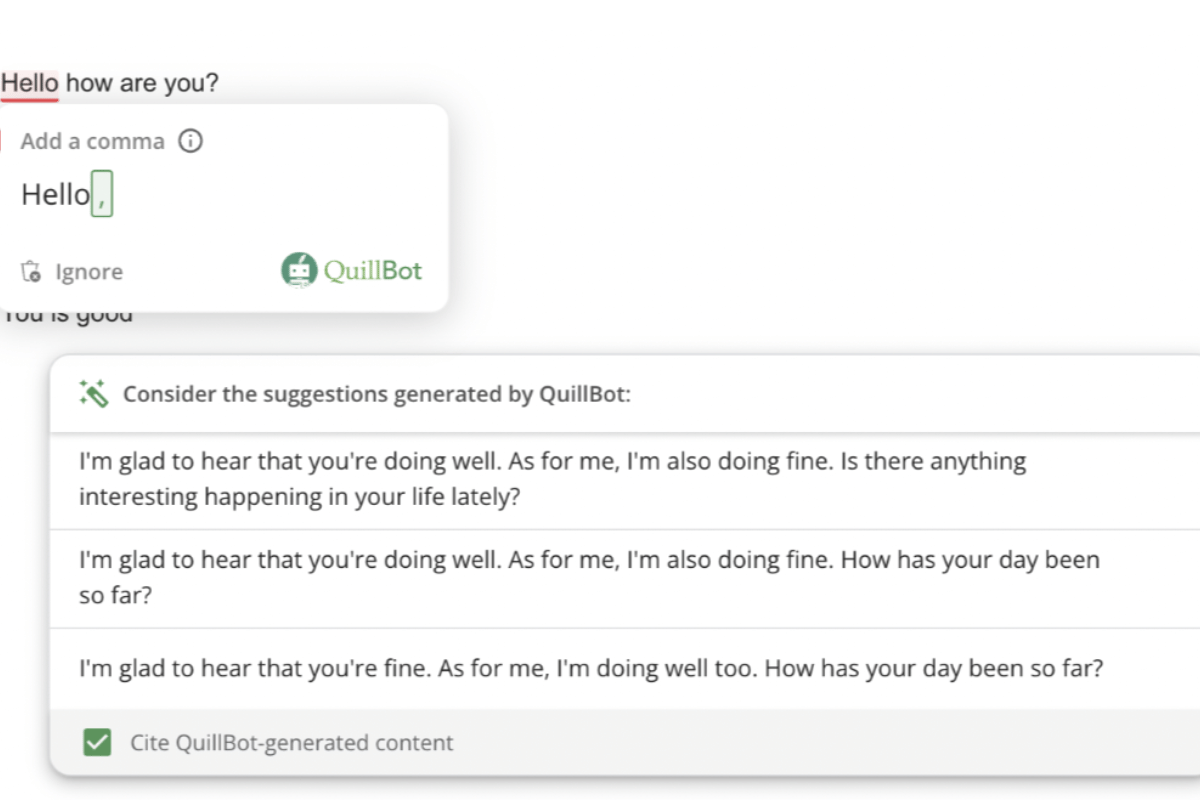
Quillbot has been marketing itself as a complete writing platform with the ability to paraphrase, summarize, and check grammar.
Strengths: The paraphrasing tool can be a good help for students to change the structure of their sentences and come up with different ways to express a thought. This tool can be very helpful when students have a hard time putting a concept in their own words or simply want a variety of sentences. The summarizer feature can assist when the research and notes are taken from long articles.
Concerns: The paraphrasing tool is very close to the line of what’s ethical or what’s not. On the one hand, it could help the students to work on their sentence structures; on the other hand, it could be misused for the purpose of hiding plagiarism. Students would need to be very clearly informed about what to do and what not to do.
Best for: Improving clumsy sentences, getting to know synonyms and other phrasings, and outlining research materials.
Notion AI
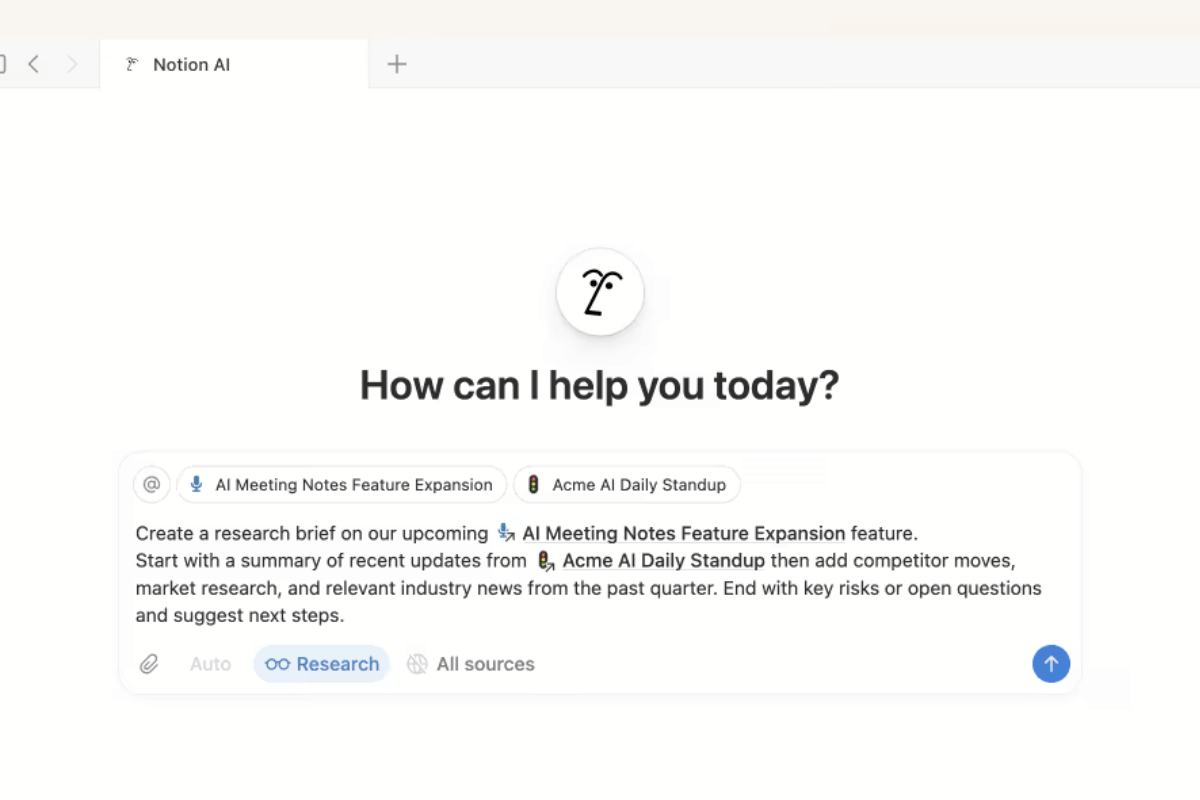
The Notion AI integrated into the widely used note-taking and organization application Notion, is an AI assistant that guides the students in their research and writing process.
Strengths: One of the major advantages of Notion AI is its being smoothly embedded into the larger Notion workspace. Students may use it for organizing research notes, making outlines, and writing all within the very platform through which they are managing their assignments. This tool is particularly useful for those projects that last for a long time and require having a good organization along with writing.
Best for: Shouldering the students that are already using Notion for organizing, and want AI support that is part of their workflow.
The Wider Phenomenon: Students and AI Tools
The great use of AI homework helpers shows more noticeable shifts in the education sector and technology over time. The students of today are under great academic pressure, but at the same time, they have access to the most powerful writing tools like never before. This scenario generates chances but at the same time, it creates difficulties.
Reasons for the students’ preference of AI:
Research pressures and time limitations are the major factors that lead to the use of AI solutions by many students. A college student that is taking several classes, working part-time, and participating in extracurricular activities may utilize AI to help him/her quickly outline an essay and thus concentrate the little time he/she has on shaping and polishing his/her arguments. For people who come from non-English speaking countries or have learning differences it is often the case that AI tools are the only option for them to improve their faculty of understanding assignment requirements and their written English.
The learning debate:
AI’s critics claim that the use of AI homework helpers results in poor learning, therefore, a dependency of the future generation of students who cannot write without the help of technology. These fears, to some degree, are justified since the non-engagement of students with the course material via AI leads to great loss of learning and skill development.
On the other hand, the advocates maintain that students have never stopped using the tools that are at disposal, such as calculators or spell-checkers, and that AI is merely the next stage in the process. Moreover, they stress the point that the learning of how to work with AI effectively might be an essential skill for the future. The difference is the way students interact with the tools.
The academic integrity issue:
The educational institutions are still trying to figure out how AI is going to be treated in their academic integrity policies. To this end, some of the universities have outright banned the use of AI tools, while others are coming up with somewhat complex policies where they will be able to tell the difference between legitimate assistance and academic dishonesty. There are still a lot of instructors that provide assignments that purposely put students in a situation where they have to rely less on AI, focusing on the student’s personal reflection, in-class writing, and oral presentations.
Responsible Use Guidelines
Here are the principles for ethical and educational use for students who use AI homework helpers:
First, consider your own thoughts. Use AI after you have tried the assignment yourself, wrestled with the concepts, and established some initial ideas. The application should not supplant but rather stimulate your cognitive process.
Utilize AI for grasping, not for getting the work done. Rather than simply obtaining answers, request AI to elucidate the concepts, offer materials, or mention the requirements of the assignment.
Cite always in a proper manner. In case your work contains AI-created ideas or phrases, first refer to the guidelines of your institute on citation and then adhere to them strictly.
Viewing AI as a tutor would be more appropriate than taking it as a ghostwriter. The aim should be to get your skills and comprehension improved, not to just get your assignment done.
Cultivate your voice. Do not allow AI to diminish the uniqueness of your writing. It is your individual viewpoint and voice that confer value to your work.
Conclusion
Although AI homework helpers have been a part of the educational landscape forever, Picture Claude, ChatGPT, Grammarly and others as the tools that are genuinely useful when used wisely—they can assist the students not only to grasp the difficult concepts, but also to improve their writing skills and to handle their workload more efficiently.
Proper use of these mechanisms can mins the risks, though, academic integrity and genuine learning. The line against black academic practices is largely drawn by intention and involvement. The students utilizing AI for concept understanding, idea generation and work refinement can reap large educational benefits, while the ones who let it be the source of their no input and no writing at all, lose the purpose of their whole education.
As AI technology keeps on progressing, both learners and educators need to adjust. These students will very likely be the ones who master the art of striking a balance between using these powerful tools and retaining their own critical thinking, creativity, and authentic voice. It is not about driving AI ion the educational sector—the train has left that station—rather it is about teaching the learners the right way to interact with it to promote their learning, not to replace it.
Education will, inevitably, be an AI-powered future, but the unstoppable human traits of curiosity, struggle, growth, and profound understanding that add flavor to the learning process should never be eliminated from that scenario.